

By TENT Ambassador, Philippa Forrester
The Iberian wolf, a smaller subspecies of the grey wolf, with darker and often red colouring, thrived in family packs across the whole of Spain until they were relentlessly persecuted by people and by the 1980’s became almost extinct. The European Nature Trust has been working with local partner organisations to support wolf recovery in Spain, with the aim of making sure the story doesn’t repeat itself. Recently, our partners at ASCEL (Association for the Conservation and Study of the Iberian Wolf) have found success in preventing rollbacks to protection levels to Iberian wolves in specific regions, preventing planned killings of wolves.
The Association for the Conservation and Study of the Iberian Wolf (ASCEL) has built its reputation largely through strategic legal challenges and advocacy aimed at strengthening (or defending) protections for the Iberian wolf in Spain’s highly fragmented regional governance system. One of its most important broader successes—alongside other conservation acions—was helping create the legal and political momentum that led to the 2021 nationwide inclusion of the Iberian wolf on Spain’s List of Special Protection Wild Species, which effectively banned routine hunting across the country and removed regional hunting quotas. This marked a major shift from earlier decades when wolves could be legally hunted in northern regions, and it established a stronger legal baseline that ASCEL has since used in court challenges.
More recently, ASCEL has focused on defending that protection against rollbacks, and this is where its legal campaigning has now had visible impact. As Spain’s parliament and some regional authorities have attempted to reintroduce culling or hunting (especially north of the Duero River), ASCEL has repeatedly challenged these measures—arguing procedural flaws, lack of scientific justification, and conflicts with national and EU conservation law. Even in a context where legislation has sometimes moved against wolf protections, these legal actions have delayed or prevented specific culls from proceeding and forced stricter scrutiny of lethal control policies, reinforcing the principle that wolf killing should be a last resort rather than routine management.
The situation for Iberian wolves in Spain, as it is for wolves in many other places, is complicated and multi-layered. Legal protection from the 1980’s and a ban on hunting in 2021, alongside socioeconomic shifts that saw waves of rural–urban migration, all allowed the population to recover somewhat from its near demise, although it was still declared regionally extinct in southern Spain. The below map shows the geographical evolution of the Iberian wolf population, with wolves now only occurring in around 20% of the national territory.
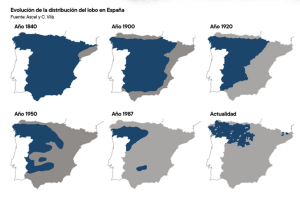
Many farmers and ranchers still view wolves as a threat to livestock damages in the context of an economic system that has become increasingly challenging for traditional farmers to make a living, placing challenges for coexistence. Many are still against the return of wolves to areas from which they were historically driven, and believe their numbers should be managed in traditional lethal ways. Some of this ‘management’ is cruel and in many areas of Spain today continues illegally; it simply means exterminating wolves in any way that works – shooting, trapping, hunting with dogs, digging out dens, leaving orphan cubs to fend for themselves. Sometimes this ‘work’ is even done by gangs who glorify the killing under a machismo pretention.
Wolves, even with their large canine teeth, don’t stand a chance against guns and yet, in an effort to excuse this cruelty, it is the wolf which is demonised and an important element of the ecosystem lost in the process.
It is important that we learn to see wolves differently.
Wolves are sentient beings which live in extended, loyal, family groups, they survive by taking care of each other and by hunting in carefully co-ordinated groups. We even have evidence to suggest that grey wolves grieve. So, when individual wolves are randomly killed in the kind of ways that hunting and poaching encourage, the whole pack suffers, pack structure changes and so does the ability of other members of the group to survive.
Wolves are far more than predators on the landscape, they are an integral part of the ecosystem, setting off a chain of changes which positively affect many species. For example, simply by encouraging their prey to move about more in response to their presence, they change the spatial distribution of herbivores across the landscape, allowing trees to grow better and naturally regenerate. In the US, more than twenty-five years of research, after the successful reintroduction of grey wolves shows benefits to beavers and even songbirds and invertebrates in the Greater Yellowstone Ecosystem. In Italy, Io Non Ho Paura Del Lupo, supported by TENT, and working with shepherds in the Apennine and Alpine regions have shown that there are many ways to support coexistence and for the whole landscape and the humans that live in it to benefit from the presence of wolves.
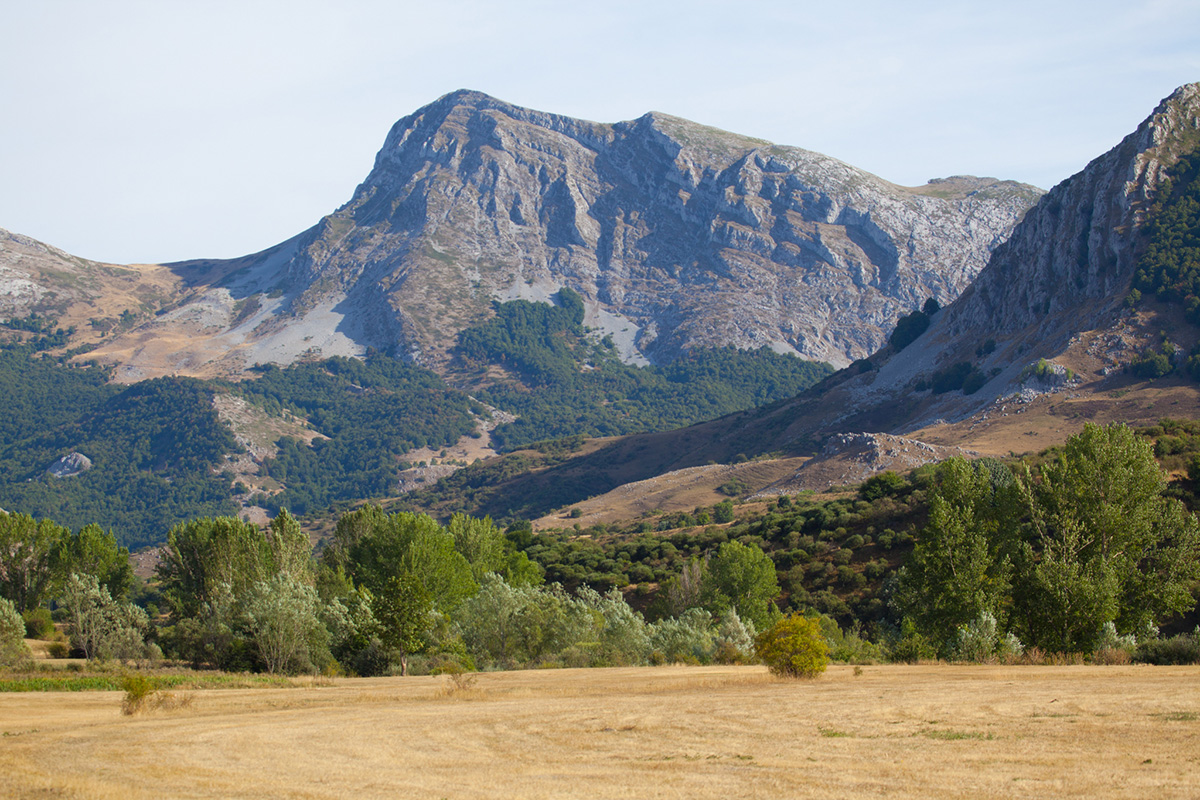
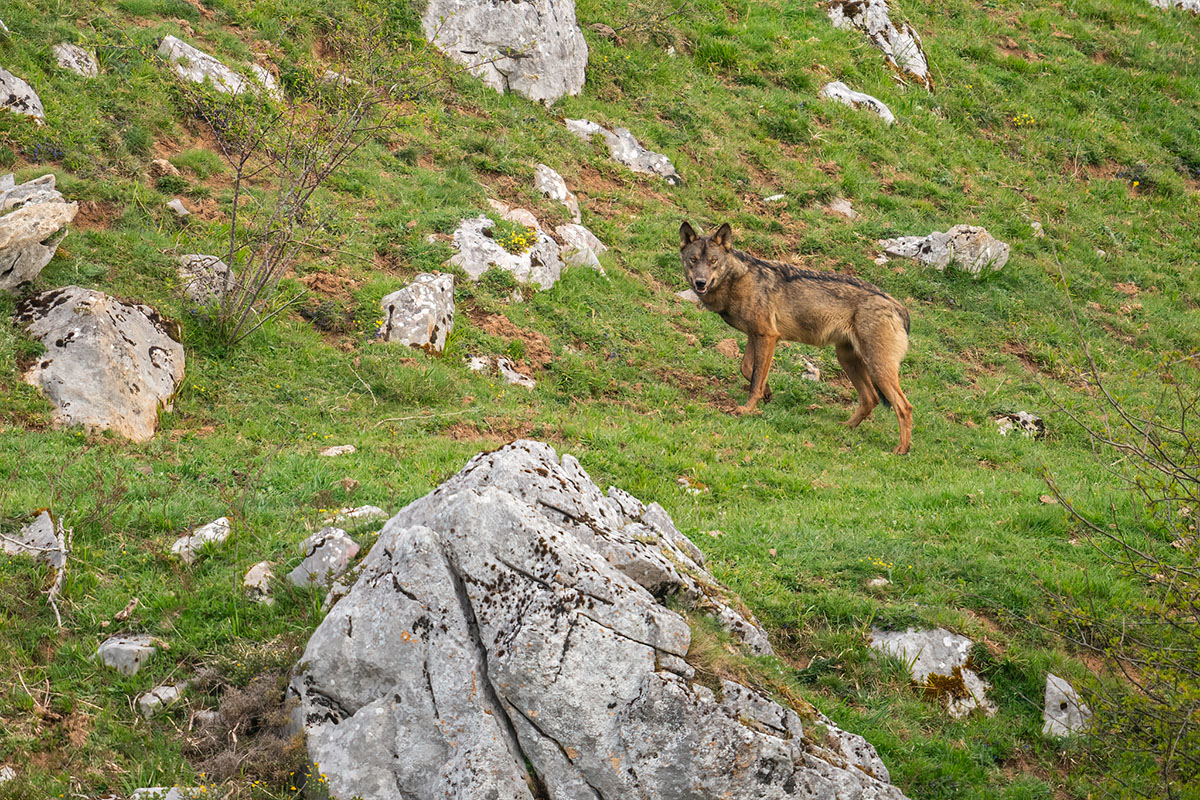
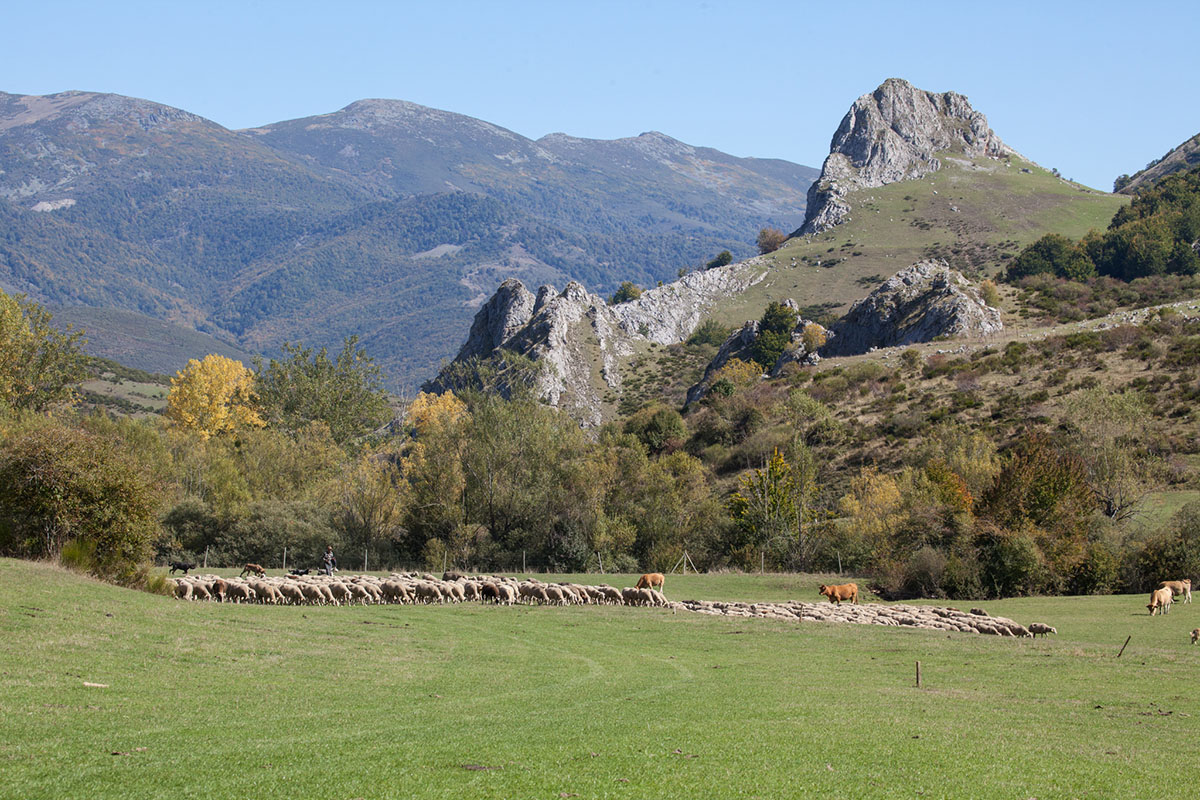
Due to the interventions of powerful lobbying groups, in March of 2025 the Spanish government lifted the ban on wolf hunting. Late in 2025 the European Parliament voted to downgrade wolf protection. This was potentially a disaster for the slow recovery of the Iberian wolf population.
So, TENT has been supporting those who have had to ‘dig deep’ and get ‘hands on’ in the face of what seem to be backward steps for the Iberian wolf.
Worldwide, much meaningful conservation work happens within the legal system and in court. TENT continues to support the NGO ASCEL (Association for the Conservation and Study of the Iberian wolf) in these endeavours to successfully appeal new laws and ensure that the legal situation for Iberian wolves responsibly upholds the legal architecture of the European landscape.
Little by little this hands on hard work is paying off. In February 2026 in Asturia the supreme court overturned their wolf control program which would have allowed 53 wolves to be killed. ASCEL were able to challenge this because it did not comply with the legal system. This was a matter of legal wording, the defence of wolves, by those scientists and biologists who knew how to work within the legal system, paid off. ASCEL is fighting for wolves in other regions of Spain too with successes in Cantabria, and Galicia in the North West of Spain, released March 2026. In July 2025, the High Court of Justice of Galicia (TSJG) granted a precautionary suspension of the regional government’s authorization of wolf hunting for the 2025–2026 season, in direct response to a legal challenge brought by ASCEL.
Awareness of wolf conservation issues and a sense of value for wild wolves among the Spanish public is also on the rise. In June 2025, a march in Madrid showed just how much the public consciousness is shifting in favour of these animals and the country’s media are increasingly making noise for wolves, shifting the old story about the Iberian wolf to one of cultural pride and increasing awareness of the challenges and value of these icons.
There is still so much work to do. The threat to individual wolves continues on a daily basis. Now, is the time to support those who want to tell a better story, politically, legally and culturally about the survival of the Iberian wolf in Spain.
Share This Post
Discover More

Seven days looking for bears in Europe’s Yellowstone – the May 2026 Romanian Coexistence Adventure
Tales from an unforgettable trip in support of a new National Park.
Read More
